cost optimization focused positioning for cooperatives resource optimized agriculture spraying drone task planning for inputs?
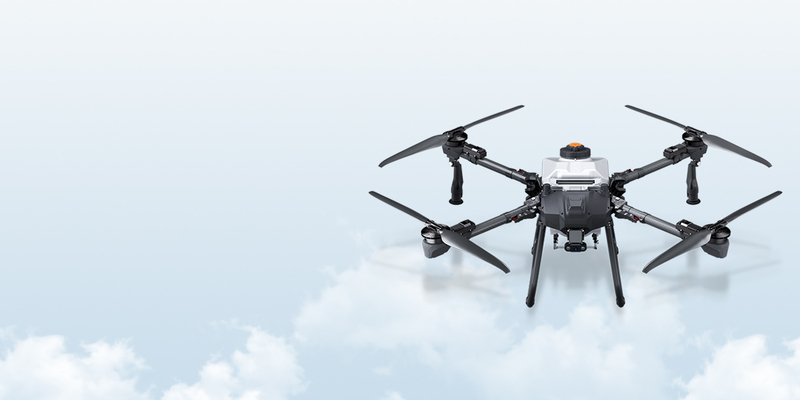
The adoption of remote flying devices within cultivation methods is quickly reshaping strategies to watch over crops, initiating the period of accurate agriculture. These modern technologies, armed with precise measurement devices, afford notable clarity on farming scenarios, exceeding conventional techniques. Growers can recognize concerns including ailments, poor mineral supply and irrigation faults with rapidity and meticulousness, permitting focused actions reducing loss and enhancing output. Exceeding basic monitoring, pilotless aircraft produce thorough three-dimensional layouts of parcels, delivering important metrics to refine crop spacing and chemical allocation, ultimately encouraging responsible and bountiful crop production. The adoption of this technology is particularly beneficial for large-scale farms but is increasingly accessible to smaller growers seeking to enhance their crop performance
Refined Crop Management with UAVs: Recent Developments
Crop production areas transform dramatically, mostly caused by drone technology embedding. Such unique platforms initiate a stage of targeted agronomy, moving beyond traditional methods and offering unprecedented insights into crop health and resource management. Aerial robots furnished with refined instruments such as multispectral and infrared lenses rapidly compile comprehensive facts on crop lands. Delivering growers exact data on foliage status, moisture scarcity, and bug invasions. This important information enables precise corrections—like adjusted fertilizing, watering, and pest control—reducing resource loss and enhancing productivity. The capacity to track plant development across full cycles delivers unprecedented knowledge, fostering greener and more lucrative agricultural methods. Moreover, the simplicity of drone data gathering cuts traditional scouting durations and costs, granting growers freedom to emphasize additional operation facets. The upcoming cultivation industry undoubtedly revolves around drone-technological maturation and adoption
Cultivation Spraying Systems: Efficiency and Precision
The deployment of UAV treatment equipment is changing up-to-date farming operations. Historically, pesticide application depended on hand-operated spraying or tractor machinery, usually causing considerable loss and patchy distribution. Yet employing unmanned application solutions delivers exceptional effectiveness and accuracy. The apparatuses rapidly map agricultural plots, locate sectors needing particular response, and apply nutrients or sprays with high correctness. So, chemical application shrinks, decreasing environmental side effects and costs, facilitating enhanced production and eco-compatible agrarian operations. Additionally, operation under harsh weather or tough-to-reach areas grants cultivators a key edge
Crop Protection Flying Drone: Guarding Your Yield
The progress of tailored cultivation has opened a new chapter in crop leadership, including plant security flying systems spearheading the progress, nicknamed drones. Those phenomenal platforms supply potent solutions for agriculturalists trying to lower impairments stemming from parasites, ailments, and weeds. Installed with advanced sensory tech and dispersal units, they precisely manage damaged places, notably curbing broad agent application. Consequently, it results in improved outputs and fosters a greener strategy for cultivating food, preserving ecosystems and public well-being. Furthermore, the speed and efficiency of UAV-based application allows for quicker responses to emerging threats and reduces labor costs, giving farmers a competitive edge in today's demanding market
Aerial Farming Systems: Growing Returns and Lowering Costs
Current environment of farming output sees profound change, mainly propelled by integration of drone technology known as UAVs. These influential mechanisms deliver multifold remedies for farmers, promoting crop improvements and financial savings. Employing accurate vegetation inspection and swift discovery of pest problems alongside particular nutrient and watering deployment, drone platforms confer special awareness. Besides, analytics-powered understanding obtained through UAV pictures facilitates savvy management, backing sustainable endeavors and raising farm profit. This progress overcomes fashions, fast emerging as a necessary part of current crop supervision
UAV Crop Examination: Early Warning, Pinpointed Measures
New agricultural realms rapidly employ pioneering solutions, where flying UAV crop surveillance acts as notably disruptive implements. Using overhead photos and high-grade assessments, pilotless drones facilitate excellent proficiency in recognizing initial crop tension signals before observable from land. Rapid recognition facilitates growers’ execution of targeted adjustments including irrigation control, fertilizer dispersion, or pest elimination, reducing deficits and enhancing productivity. The ability to quickly assess vast acreage with high resolution imagery significantly improves the efficiency of farm operations and contributes to more sustainable agricultural practices. Correspondingly, continual aerial patrols produce valuable intelligence for creating sequential documentation of crop status, enhancing knowledge-based management across terms
Optimizing Crop Care: Drones and Chemical Decrease
The swelling market of focused plant cultivation performs important restructuring motivated by drone dispersal methods. Those cutting-edge instruments ensure remarkable effectiveness when applying crop safeguarding agents, nourishment, and imperative interventions. Their critical edge is precise targeting of diseased regions, stopping extra spraying that typically wastes agents and damages nature. Farmers can now map their fields in detail, identifying areas requiring specific attention, leading to a substantial reduction in overall chemical usage—a benefit that extends to both their bottom line and the health of the ecosystem. Besides, findings gathered by flying devices contribute to making sound planting determinations, nurturing environmentally compatible and effective crop production. Such expansion demonstrates notable enhancement in input prudence and ecological stewardship throughout farming fields
Airborne Platforms for Crop Condition Auditing
Aerial systems immediately redefine botanical health surveillance. Delivering unparalleled resolution and productivity over standard techniques. Topping basic eye inspections, these units possess sophisticated sensors, including multispectral, hyperspectral, and temperature imaging, allowing comprehensive diagnostics. The insights support targeted recognition of crop stresses including nutrient shortfall, disease occurrence, and water scarcity, typically before visual evidence. Moreover, unmanned collected photos fused with machine intelligence create elaborate vegetation indicators and forecasting tools, facilitating targeted measures and optimal material assignment. Capacity for fast broad-field scanning alongside detailed information greatly enhances evaluation precision and supports proactive, resource-conscious farming, resulting in better productivity and lower ecological footprint. Priority grows on live data utilization fostering swift reaction capabilities to recognized difficulties, transitioning methods from reactive to proactive responses
Precision Agriculture Drone Applications: A Comprehensive Guide
The growth of remote flying craft deeply alters precision farming scenery. Such state-of-the-art platforms supply producers unequaled potential in monitoring farm health, coordinating resource application, and maximizing returns. More than basic visuals, current farming UAVs incorporate complex detectors such as multispectral, hyperspectral, and thermal optics, allowing thorough evaluation of vegetation health, stress, and watering requirements. Results achieved enable construction of detailed crop health markers, spotting affected or pest-attacked sectors, and assessing plant density, assisting efficient and sustainable agronomy. In addition, UAVs support specialized application of chemicals and nutrients, cutting excess use and lessening ecological harm, while enabling almost instant field status monitoring for prompt management and informed choices formerly unattainable
Improving Crop Harvest Protection with UAV Drone Technology
The deployment of UAV systems is fundamentally changing methods for safeguarding produce. {Traditionally, assessments of field health have been laborious and often reactive, relying on sporadic ground checks|Historically, evaluations of agricultural conditions were tedious and mostly reactive, based on occasional on-site inspections|Conventionally, examinations of crop status were time-consuming and frequently reactive, dependent on intermittent land surveys|In the past, inspections of cultivation wellbeing were demanding and regularly reactive, relying on scattered field observations|Previously, appraisals of farm condition were burdensome and uav drone agriculture often reactive, founded on irregular ground assessments|Earlier, analyses of plantation health were cumbersome and frequently reactive, relying on occasional terrestrial checks|Formerly, scrutiny of agricultural status was slow and typically reactive, based on periodic