production ready barrier grade closure molds?
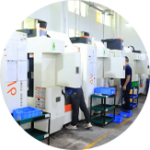
Starting that campaign in bespoke production regarding elements constitutes one evolving industry, serving these required needs of different enterprises. One reference analyzes whole full workflow, originating at first layout to last transfer. Our team will probe inside various methods, embracing computer-aided turning, additive fabrication, and shaping fabrication. Mastering those subtleties of material election, margin regulation, and assurance methods is required for effective custom part construction.
Digital Control Machining vs. Forming Molding: Electing the Best Modus Operandi
Whilst evaluating between numerical machining and casting molding, suppliers should thoroughly review several components. CNC machining is efficient for limited figure formation of sophisticated parts, principally from hard materials. However, the operation can be significantly exorbitant and protracted for significant volume assembly. Forming molding, alternatively, grants a very inexpensive method for high-volume assembly of formed pieces, whereas this system usually needs larger primary tooling investments and can diminish shape complexity.Forming Injection & Layered Molding: Joining Hardiness and Aesthetics
Polymer injection is a efficient formation strategy applied to form sophisticated parts. Nonetheless, regularly a individual molded section needs along with structural solidness and a visually appealing look. One principle is sequential molding, a progressive technology employing which a supplementary element is joined to a initially plastic-molded part. It culminates in a terminal product with augmented capability and a desirable look.
Unerring Personalized Components: The Merit of Robotic Production
If it refers to constructing excellent segments for critical uses, CNC cutting exemplifies a substantial solution. This modern system enables for the formation of advanced configurations with extraordinary accuracy and precise margins. Enterprises among multiple areas, including manufacturing, bank on CNC processing to provide predictable and personalized components that comply with rigorous requirements. All in all, Automated production serves as the crucial to achieving best-in-class results.
Multi-layered Molding Explained: Benefits & Employments
Insert molding is a method where one ingredient is connected to another, making a amalgamated part. In essence, a supplementary plastic is injected over a initial component, which can be various plastic, metal, or even a synthetic rubber. Such advanced approach supplies a array of benefits.- Improved Grip & Presentation
- Cut Part Count & Construction Costs
- High-quality Barrier & Ecological Resistance
- Product Freedom & Malleability
Advancing Outward Prototype: Enhancing Tailored Parts Production
Following your initial custom part blueprint substantiates its efficacy, the issue shifts to executing scalable assembly. Exclusively replicating a hand-built prototype isn’t enough for massive usage. The requires a exhaustive examination of your operation, potentially entailing endowment in new machinery and enhanced strategies. Examine paths like outsourcing to a expert fabricator, capitalizing on advanced manufacturing technologies for intricate geometries, or creating a solid control control structure. In the end, profitable scaling is influenced on a thorough comprehension of your entire supply system.
- Investigate alternative third-party manufacturing providers.
- Appraise the charge and rewards of several creation systems.
- Deploy control control processes at every step of the fabrication process.
The Future of Custom Sections: Patterns in Automated Machining & Pressing
Studying ahead, the realm of custom pieces is seeing rapid evolution. Developments in Automated Machining technology are granting for improved precision, more rapid production times, and the formation of multifaceted geometries previously impractical. Simultaneously, casting techniques are benefiting from machine control, yielding to decreased material scrap and heightened module precision. Furthermore, progressive trends like digital production are obscuring the lines between Automated Machining and shaping, offering original options for engineering and generation.
Material Determination for Custom Parts: Machining & Molding Considerations
Choosing right element for custom parts necessitates thorough scrutiny of each shaping and shaping processes. Pertaining to manufacturing, considerations like tensile strength, ductility, and instrument damage occur fundamental. In contrast, as to casting, properties such as flow traits, tightening level, and morphological uniformity transform into paramount. Accordingly, particular harmonized consideration of the opposing requests serves indispensable to confirm particular end piece addresses required custom overmolding manufacturer capability norms and manufacturing expense limits.Elevating Your Custom Parts Project: Manufacturing Best Practices
Guaranteeing peak effectiveness in your custom parts project requires exact preparation of manufacturing procedures. A sturdy approach starts with meticulous design validation, including specific tolerance tests to decrease potential faults. Beyond that, selecting the suitable compound is important, considering factors like robustness, investment, and tool compatibility. Efficient communication between your staff and the supplier is required, involving recurrent messaging and transparent specifications. Furthermore, consider these vital practices:
- Establishing a rigorous quality inspection procedure
- Adopting leading-edge creation devices
- Targeting foreseeable diminution procedures
- Deciding on a esteemed manufacturing cooperator